

Asking the right questions before hiring a renovation contractor can mean the difference between a smooth family project and months of chaos with dust-covered toys, missed school pickups, and power tools near curious toddlers. When you’re renovating with children in the house, standard contractor questions aren’t enough. You need to know about work hour boundaries that won’t clash with nap time, how crews will secure hazardous areas from wandering little hands, what happens when your preschooler inevitably needs to use the bathroom that’s mid-demolition, and whether you’ll have access to running water for dinner prep. Handling stress as a parent already comes with enough challenges without adding construction surprises to the mix.
This guide gives you 12 essential questions designed specifically for Kitchener families hiring renovation contractors. Each one addresses a real concern parents face during construction, from protecting your kids’ health and safety to maintaining some version of your daily routine. You’ll learn which answers should reassure you and which responses are red flags that signal you should keep looking. The questions cover everything from lead dust protocols in older Kitchener homes to communication systems that actually work when you’re juggling daycare dropoff and site walk-throughs.
Whether you’re updating a single bathroom or tackling a whole-home reno, these questions help you evaluate contractors through a family lens. Working with a home renovation contractor serving Kitchener who understands family dynamics transforms your project from an endurance test into a manageable chapter of your home’s story.
How We Chose These Questions for Kitchener Families
I’ll be honest, I learned these questions the hard way. When my husband and I decided to renovate our Kitchener kitchen while our daughter was two and our son was just six months old, I thought asking “How much?” and “How long?” covered everything we needed to know. Spoiler alert: it didn’t. Three weeks in, with drywall dust coating every surface despite promises of containment, a work crew showing up at 7 AM during my baby’s morning nap, and no clear answer about when we’d have a functioning sink again, I realized we’d asked all the wrong questions.
That experience, combined with conversations with dozens of other Kitchener moms through local playgroups and online parenting communities, shaped the questions you’ll find in this article. I reached out to moms who’d survived everything from bathroom remodels to full basement finishes, asking them what they wish they’d known before signing a contract. The patterns were clear: families needed to ask questions that went way beyond standard renovation concerns.
We focused specifically on what makes family renovations different. Sure, everyone cares about cost and quality, but parents also need to know if the contractor has a plan for keeping curious toddlers away from power tools, whether they’ll work around your preschooler’s 1 PM nap, and how they handle the reality that you can’t just move out for six weeks. These aren’t luxury concerns, they’re the questions that determine whether your renovation experience is manageable or absolutely chaotic.
1. Are You Licensed and Insured to Work in Kitchener?
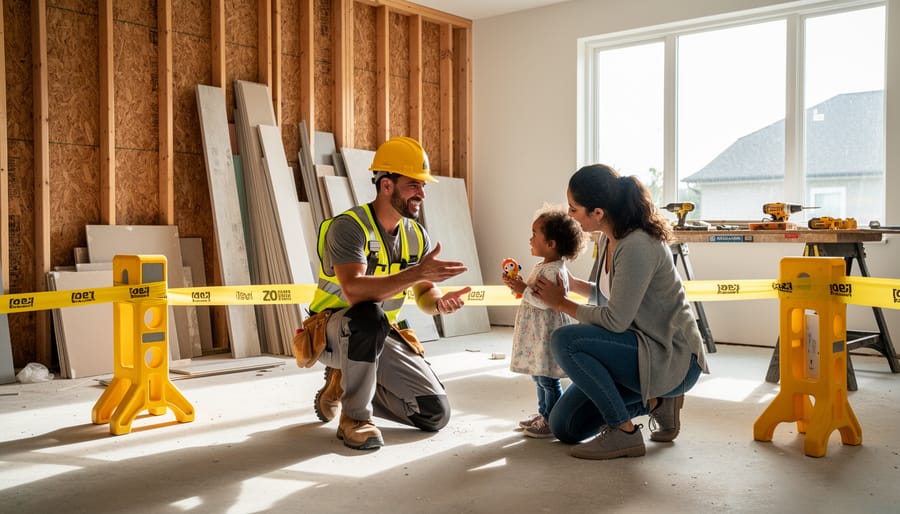
Before you sit down with any contractor, this question needs to come first. In Ontario, general contractors don’t require a provincial license, but they absolutely need valid liability insurance and WSIB coverage. This protects you if a worker gets hurt on your property or if construction damage affects your home. When I was renovating with toddlers underfoot, knowing we had proper insurance coverage gave me genuine peace of mind.
Ask to see their Certificate of Insurance directly from their insurer, not just a photocopy they could have altered. It should show at least two million dollars in liability coverage. For WSIB, request a recent Clearance Certificate proving they’re in good standing. If they’re doing electrical or plumbing work, those trades require specific Ontario licensing, so verify those credentials too.
Watch out if a contractor gets defensive about sharing this documentation or promises to send it later but never does. Legitimate contractors expect this question and have these documents ready to show. Working with an uninsured contractor might save money upfront, but one accident could cost you tens of thousands and put your family’s home at serious risk.
2. Can You Provide References from Other Kitchener Families?
When a contractor says yes to this question, don’t just collect names and move on. Ask for at least three references from families with children who completed similar projects in the past year. You want recent work, and you want families who understand the chaos of renovating with kids underfoot.
Here’s what to ask those references: How did the crew handle safety around your children? Were they respectful of your family’s schedule and noise concerns? Did they communicate clearly when things changed? How did they leave the worksite each day? Most importantly, would you hire them again?
Local Kitchener references matter because contractors familiar with our area understand specific challenges, our older home stock in neighborhoods like Victoria Hills, municipal permit processes, and even seasonal weather patterns that affect timelines. A contractor who’s successfully navigated a kitchen reno in a 1920s Kitchener home knows what surprises might lurk behind those walls.
If a contractor can’t provide local family references, that’s worth noting. It might mean they’re new to the area or don’t specialize in family-occupied renovations.
3. What’s Your Experience with Family-Occupied Renovations?
When our kitchen renovation started last March, I learned quickly that not all contractors know how to work around families with young children. This question helps you gauge whether they truly understand the challenges of renovating a lived-in home with kids underfoot.
A contractor experienced with family renovations will have specific strategies ready. They should describe how they’ll cordon off work areas with physical barriers, schedule disruptive tasks around your family’s routines, and maintain pathways for little ones to move safely through the house. Ask them to walk you through a typical day on-site and how they’d adjust if your toddler naps from 1-3 PM.
Red flag? Contractors who shrug and say “we’ll figure it out as we go.” That casual approach can mean weeks of chaos for your household. The right contractor will ask you questions about your family’s schedule, your children’s ages, and any specific concerns you have. They’ve done this before and know that respecting your family’s rhythms isn’t just nice, it’s essential for a renovation that doesn’t leave everyone exhausted and stressed.
4. How Do You Handle Worksite Safety Around Children?
This question reveals whether a contractor truly understands the stakes of working in a home with children. A good answer should include specific protocols, not vague reassurances. Ask them to walk you through their daily safety routine, how they secure the work area each day, what physical barriers they use to prevent children from accessing dangerous zones, and how they store tools and materials when workers aren’t actively using them.
The best contractors will describe multi-layered approaches: locked storage for power tools, childproof barriers around work zones, daily sweeps for nails and sharp debris, and secure containment of chemicals, adhesives, and paint. They should mention covering electrical outlets, cordoning off stairs or open edges, and keeping extension cords out of reach. Ask how they handle situations when a curious toddler approaches the worksite, do workers know to stop immediately and call a parent?
Request specific examples from past family projects. When I was planning your schedule around a kitchen renovation with a two-year-old at home, our contractor installed floor-to-ceiling plastic barriers with zippered entries, stored all materials in a locked van overnight, and did a walk-through with me every evening to confirm nothing dangerous was accessible. That’s the standard your family deserves, a contractor who treats your home like their own child lives there.
5. What’s Your Realistic Timeline, and How Do You Handle Delays?
Let me be upfront: contractors who promise “six weeks, guaranteed” are usually the ones you’ll still be chasing six months later. When I asked our contractor for a timeline on our kitchen reno, I specifically said, “Tell me the realistic version where things go wrong, because I need to plan around March break and my mom’s visit in May.” That honesty saved us from overpromising to family and gave us breathing room when a plumbing surprise added ten days.
Ask what their typical timeline is for a project like yours, then ask what could extend it. Good contractors will walk you through common delays: permit processing in Kitchener takes two to three weeks minimum, custom orders can push timelines by a month, and discovering knob-and-tube wiring (hello, older Kitchener homes) means stopping everything for electrical upgrades. They should explain how weather affects exterior work and what their policy is if they’re juggling multiple job sites.
The family angle matters here. Tell them about upcoming school breaks, birthday parties you’re hosting, or visiting relatives. A contractor who’s worked with families will help you plan around these dates or at least be honest when your timeline isn’t realistic. You might need to shift your daughter’s birthday party to a friend’s house or load up on kid-friendly home activities during the noisiest weeks, but at least you’ll know in advance instead of scrambling last-minute.
6. Who Will Be the Point Person for Daily Communication?
When you’re juggling daycare pickups, work calls, and everything else on your mom-to-do list, the last thing you need is a contractor who’s impossible to reach. That’s why nailing down your communication structure before work starts matters so much.
Ask who’ll be your main contact person. Will it be the owner? A project manager? One of the crew leads? Get their name, direct phone number, and preferred contact method, text, email, or phone calls. Some contractors love texting updates (perfect when you’re elbow-deep in toddler lunch prep), while others prefer scheduled check-ins.
Find out their typical response time. Same day? Within a few hours? This sets realistic expectations, especially when your three-year-old discovers the construction crew left a gate open or you spot something that doesn’t look right.
Ask how they handle urgent issues versus routine questions. If there’s a water leak or safety concern while your kids are home, you need to know you’ll get someone immediately, not a callback next Tuesday.
The right contractor will have a clear system that fits into your already-packed family schedule.
7. What Are Your Working Hours and Noise Levels?
This question saves you from the nightmare scenario where jackhammering starts at 7 a.m. on your toddler’s first full sleep in weeks.
A good contractor will walk you through their typical work schedule and flag the noisiest phases upfront. Most Kitchener contractors work 8 a.m. to 4 p.m. on weekdays, but you need specifics for your project. Ask when demolition happens (always the loudest), when heavy equipment arrives, and whether they can schedule disruptive work around your family’s non-negotiables.
I learned this lesson when our contractor scheduled tile removal during my daughter’s morning nap window. One conversation could have prevented three days of an overtired, cranky toddler.
Request flexibility for critical moments. Can they start after school drop-off on certain days? Will they avoid hammering during your baby’s 1 p.m. nap? Professional contractors working with families build buffer time into schedules precisely for these accommodations. If they seem annoyed by the question, they’re not your people.
8. How Do You Handle Bathroom and Kitchen Access During Renovations?
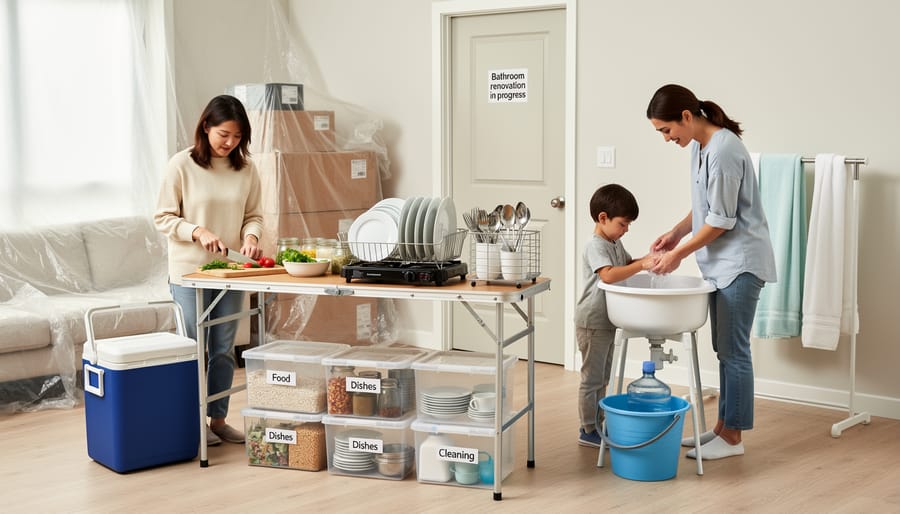
When you’re negotiating a bathroom or kitchen renovation with young kids at home, this question isn’t just practical, it’s survival mode. I learned this the hard way during our kitchen reno when my contractor casually mentioned we’d be without running water for “a few days” that turned into a week and a half.
Ask specifically which days you’ll lose access to each facility and for how long each day. A good contractor will provide a detailed schedule showing when the toilet, sink, or stove will be unavailable. They should also explain their backup plan. Will they set up a temporary sink? Can they leave one bathroom fully functional while working on another?
For kitchen renovations, find out if they’ll establish a temporary cooking area with a microwave and mini-fridge, or if you’ll need to plan around takeout and paper plates. Some contractors can schedule plumbing work strategically so you have morning and evening access to essential facilities, this kind of flexibility shows they understand family life.
Following basic motherhood advice means trusting your gut when a contractor seems dismissive about these concerns. Your family’s daily needs aren’t an inconvenience; they’re legitimate planning factors that professional contractors should address upfront with concrete solutions.
9. What’s Included in Your Written Contract?
A contractor who won’t put everything in writing isn’t someone you want managing your family’s biggest investment. I learned this the hard way when a verbal promise about “we’ll handle the dust” turned into my toddler coughing through weeks of drywall particles everywhere. Now I tell every Kitchener mom: if it’s not in the contract, it doesn’t exist.
Your written contract should protect your family on every front. At minimum, it needs these elements:
- Complete project scope with specific materials, brands, and finishes listed
- Start and completion dates with penalties for contractor-caused delays
- Total cost broken down by labor and materials, not one lump sum
- Payment schedule tied to completion milestones, never more than 10% upfront
- Change order process requiring written approval before any extra work begins
- Daily cleanup requirements and indoor air safety measures during construction
- Warranty coverage for materials and workmanship, typically one year minimum
- Insurance certificates and permit responsibilities clearly assigned
The payment schedule deserves special attention because it protects you from contractor abandonment. Never agree to pay more than a third upfront, and hold at least 10% until final inspection and your complete satisfaction. Link each payment to completed work stages you can verify.
Insist on a formal change order process before signing anything. Life happens during renovations, you might want different tile, or discover hidden plumbing issues, but changes should require written approval with updated costs before work proceeds. This prevents surprise bills that blow your family budget.
10. How Do You Handle Dust Control and Air Quality?
Construction dust isn’t just messy, it can trigger asthma, allergies, and respiratory issues in kids. A contractor who takes air quality seriously will have specific answers ready, not vague promises about “keeping things clean.”
Ask what physical barriers they’ll use. Proper dust containment means plastic sheeting sealed to floors and ceilings, not just a tarp hung in a doorway. If they’re demoing drywall or sanding, they should use equipment with HEPA filtration attachments that capture fine particles before they spread through your home.
Find out about their daily cleanup routine. Will they vacuum with HEPA filters at the end of each day? How often do they change HVAC filters if work is happening near vents? Some contractors run air scrubbers during dusty phases, machines that continuously filter airborne particles.
For major demolition or work involving old homes (where lead paint or asbestos might be present), ask about testing and specialized containment. Don’t assume they’ll handle it safely just because they should.
Pay attention to their reaction when you bring this up. A good contractor understands why a mom with a toddler or a child with asthma needs more than standard cleanup. If they seem annoyed by the question or dismiss your concerns, that’s telling you something important about how they’ll handle the actual work.
11. What Happens If We’re Unhappy with the Work?
This question reveals how a contractor handles accountability, something that matters immensely when you’re trusting someone with your family’s biggest investment.
A professional contractor should immediately explain their quality guarantee without getting defensive. They’ll walk you through their inspection process, showing how they catch issues before you do. Ask specifically: “What’s your process if I notice something that doesn’t meet our agreed standards?” Listen for a clear, step-by-step answer.
Request warranty details in writing. Quality contractors typically offer at least a one-year warranty on workmanship, plus they’ll pass along manufacturer warranties on materials. For families, this matters because problems sometimes surface months later when kids start using that renovated playroom or bathroom daily.
Their dispute resolution process should feel reassuring, not adversarial. The best contractors I’ve talked to in Kitchener describe a simple escalation: site supervisor first, then owner involvement, with everything documented through photos and written communication.
If a contractor says “that’s never happened” or gets uncomfortable discussing problems, that’s concerning. Every experienced contractor has handled complaints, what matters is how professionally they resolve them.
12. Can You Provide a Detailed, Itemized Quote?

A vague “total renovation cost” number won’t cut it when you’re managing a family budget that already stretches to cover daycare, groceries, and everything else. You need to see exactly where your money’s going.
Ask for a quote that breaks down labor, materials, permits, and disposal fees separately. This lets you spot if they’re charging premium prices for standard materials, or if labor costs seem inflated. When I got quotes for our kitchen reno, one contractor listed “cabinets – $8,000” while another itemized the specific cabinet boxes, hardware, and installation separately. The detailed quote revealed we were getting better quality for less money.
Pay special attention to what’s marked as “allowances” or “estimated.” These are placeholder numbers that can balloon quickly. If flooring shows “$3,000 allowance,” ask what grade of flooring that covers and what happens if you choose something different.
Watch for exclusions too. Does the quote include moving your appliances, or is that extra? What about repairing drywall in adjacent rooms if workers accidentally damage it? Hidden fees love to hide in the “not included” fine print.
A contractor confident in their pricing will walk you through every line item without hesitation.
Red Flags That Should Send You Looking Elsewhere
I learned this lesson when a contractor showed up twenty minutes late to our consultation and spent the entire time taking phone calls. My friend Sarah ignored similar warning signs and ended up with a three-month kitchen reno that stretched to eight months. Trust those gut feelings.
When you’re interviewing contractors, certain behaviours should immediately end the conversation. Pushy sales tactics are a huge red flag, if they’re pressuring you to sign today or claiming a discount expires tomorrow, walk away. Legitimate contractors understand families need time to think. Same goes for contractors who won’t provide a written estimate or keep dodging your request for references. One Kitchener mom told me about a contractor who got defensive when she asked about his insurance certificate. She hired someone else and later discovered he’d been sued twice for shoddy work.
Watch for these warning signs that signal trouble ahead:
- Requires large upfront deposits (more than 10-20% before work begins)
- Dismisses your family-specific concerns as “not a big deal” or seems annoyed by questions about child safety
- Can’t provide proof of WSIB coverage or liability insurance
- Refuses to put agreements in writing or says “we’ll figure that out later”
- Has no local references or the references seem vague and rehearsed
- Shows up unprepared, late, or doesn’t return calls promptly during the estimate phase
Pay attention to how they talk about your home and family. Contractors who interrupt you constantly, don’t listen to your priorities, or make you feel stupid for asking questions will only get worse once they have your money. You’re not just hiring someone to swing a hammer, you’re inviting them into your family’s daily life.
Frequently Asked Questions
How many contractors should I interview before making a decision?
Interview at least three contractors to compare approaches, pricing, and how well they understand your family’s needs. This gives you enough perspective to spot outliers and make an informed choice without overwhelming yourself during an already busy time.
Should I be present when the contractor walks through my home?
Yes, always be there for the initial walkthrough so you can point out family-specific concerns like which rooms your kids use most or where you need continued access. This is also when you get a gut feeling about whether they listen and take your concerns seriously.
What if my partner and I disagree on which contractor to choose?
Compare your notes from each interview, focusing on which contractor best addressed your specific family concerns rather than just price. Often one contractor will stand out for practical reasons, like better safety protocols or clearer communication style, that help resolve the decision.
Is it okay to ask a contractor about their own family situation?
Absolutely. Contractors who have kids often bring extra understanding to family renovations and naturally think about noise, safety, and scheduling around children’s routines.
These questions come up frequently in local mom groups, and they reflect real decision points you’ll face. Trust that taking time to ask thorough questions now saves stress later. The right contractor won’t rush you or make you feel silly for caring about details that affect your daily family life.
Your Family Deserves a Renovation Experience That Works
I still remember sitting at my kitchen table after meeting with contractors, second-guessing myself. Was I asking too many questions? Being too picky? Then my neighbour reminded me: you’re not interviewing for just any service, you’re choosing someone who’ll be in your home while your kids eat breakfast, do homework, and play.
You’re not being difficult by asking these questions. You’re being a smart parent who knows that the cheapest quote means nothing if your contractor ghosts you mid-project, or your toddler finds sawdust in their lunch. The right contractor won’t blink at these questions. They’ll appreciate working with a family who knows what they need.
Trust that feeling in your gut when something seems off. If a contractor rushes you, dismisses your concerns about your kids’ safety, or makes you feel silly for asking about dust control, keep looking. Kitchener has contractors who genuinely understand family life and will work with your routine, not against it.
Your home is where your family builds memories. The renovation should enhance that, not create months of regret. Take the time to find someone who gets it, someone who’ll text you updates between school pickup and dinner, who’ll secure the worksite before your kids get home, who treats your family’s needs as seriously as you do.
You’ll know when you’ve found the right fit. And your future self, living in that beautifully renovated space, will thank you for asking the hard questions now.